• D, 323, Udhana Udiyod Nagar Sangh, Udhana, Surat 394210

Monthly Archives: September 2024

Understanding the Fraud Triangle: A Simple Guide

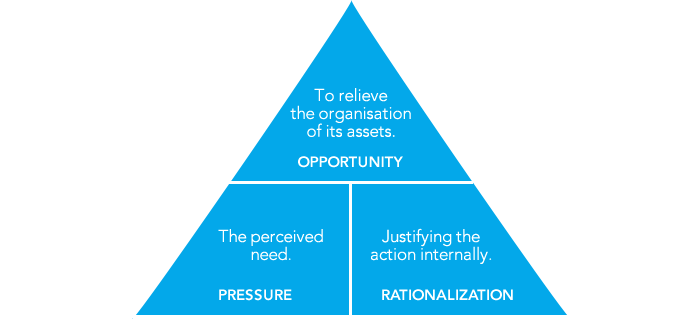
In today’s fast-paced business world, the risk of fraud is a reality that every organization must confront. One effective way to understand the conditions that lead to fraudulent behavior is through the Fraud Triangle. This model, developed by criminologist Donald Cressey, identifies three key elements that create an environment conducive to fraud: Pressure, Opportunity, and Rationalization.

Pressure: The Perceived Need

Pressure is often the driving force behind fraudulent actions. This could stem from personal financial issues, workplace pressures, or unrealistic targets set by management.

Real-World Example

Imagine a sales manager who is under immense pressure to meet quarterly sales targets. Feeling overwhelmed, they might consider falsifying sales figures to appear successful and secure their bonus.

Opportunity: The Means to Commit Fraud

Opportunity refers to the circumstances that allow individuals to commit fraud. This often arises when there are weak internal controls, lack of oversight, or excessive access to organizational assets.

Real-World Example

Consider a company with poor segregation of duties where one employee is responsible for both handling cash and reconciling bank statements. This lack of oversight could create an opportunity for that employee to siphon off funds without detection.

Rationalization: Justifying the Action

Rationalization is the mental process by which individuals justify their fraudulent actions. They may convince themselves that their behavior is acceptable under the circumstances or that they will repay what they’ve taken.

Real-World Example

A finance clerk who alters financial records might tell themselves that they’re just borrowing the money temporarily, believing they will return it once their financial situation improves.

Conclusion: Prevention is Key

Understanding the Fraud Triangle is crucial for both individuals and organizations aiming to prevent fraud. By recognizing these elements, businesses can implement stronger internal controls, foster an ethical culture, and support employees under pressure.

A Comprehensive Guide to Conducting a System Audit: Step-by-Step Process and Key Considerations

Introduction

Conducting a system audit is a crucial task for ensuring the security, efficiency, and compliance of any organization’s systems. Whether you’re a small business or a large corporation, system audits help identify vulnerabilities, ensure compliance with regulations, and enhance overall performance. This guide will walk you through a detailed, step-by-step procedure for conducting a system audit, using simple language and real-life examples to make the process easy to understand.

Planning and Preparation

Define Scope and Objectives

Before diving into the audit, it’s essential to define what you want to achieve. Are you looking to assess compliance with industry regulations, identify security gaps, or ensure that internal processes are running smoothly? For instance, if your goal is to evaluate data security, your audit scope might focus on user access controls and data encryption methods.

Example

Imagine you’re running an online retail store. Your objective might be to ensure that customer data is secure and that your system complies with GDPR regulations. Your scope could include reviewing how customer data is stored, processed, and accessed.

Establish Audit Criteria

Next, set benchmarks or standards that your system will be evaluated against. These could be industry standards like ISO 27001, internal policies, or regulatory requirements.

Example

If your company follows ISO 27001 standards, these will form the criteria against which you evaluate your system’s data security measures.

Assemble the Audit Team

Gather a team of professionals with expertise in the areas you’re auditing. Make sure you have the right tools and allocate enough time for a thorough audit.

Example

For the online retail store, your audit team might include an IT security expert, a compliance officer, and a data analyst, each bringing their specialized knowledge to the table.

Data Collection

Gather Relevant Information

Start by collecting all necessary documents, such as system policies, procedures, and previous audit reports. This helps you understand the system’s current state and provides a baseline for your audit.

Example

For our retail store, you might collect the company’s data protection policy, system architecture diagrams, and any previous security assessments.

Conduct Interviews

Interview key personnel to gain insights into how the system operates and where potential risks might lie. This is your chance to understand the practical aspects of the system.

Example

You might interview the IT manager to learn about the current security protocols or speak with customer service representatives to understand how they access customer data.

Process Understanding

Analyze Organizational Processes

Develop a clear understanding of how the system supports the organization’s workflows. Observe how the system is used day-to-day, and note any dependencies or critical points.

Example

In the retail store, you could observe how customer orders are processed from the time they’re placed online until they’re fulfilled, noting where sensitive data like payment information is handled.

Identify Associated Risks

As you understand the processes, identify any risks associated with them. These risks will guide the focus of your audit.

Example

You might discover that the store’s payment system isn’t fully encrypted, posing a risk of customer data theft.

Evaluation and Testing

Assess System Design and Implementation

Now, evaluate how well the system is designed and whether it’s implemented effectively. This includes reviewing security protocols, data management practices, and internal controls.

Example

You could test the retail store’s data encryption to see if it’s effectively protecting customer information. You might also review how user access is controlled.

Identify Vulnerabilities

Look for weaknesses that could be exploited. This might involve testing software configurations, reviewing hardware setups, or assessing how users interact with the system.

Example

If the store is using outdated software, this could be a significant vulnerability, as it may not receive the latest security updates.

Internal Controls Analysis

Review Internal Controls

Internal controls are the procedures and policies that ensure the system operates correctly. Review these controls to determine if they’re working as intended.

Example

Check if the retail store has proper access controls in place, ensuring that only authorized employees can access sensitive customer data.

Test Controls

Conduct tests to see how effective these controls are. This might involve trying to access data without proper permissions or running simulations to see how the system handles errors.

Example

You could try logging in as a regular user to see if you can access admin-level data, which would indicate a failure in access controls.

Final Evaluation and Reporting

Compile Findings

Summarize your audit findings, highlighting areas of concern and recommending improvements. Your findings should be clear and actionable.

Example

You might find that the retail store’s data encryption is outdated and recommend upgrading to a more secure encryption method.

Prepare Audit Report

Create a detailed report that outlines the audit process, key findings, and suggestions for improvement. Make sure the report is easy to understand and provides a clear roadmap for addressing issues.

Example

Your report could include sections on data encryption, access controls, and compliance with GDPR, along with specific steps the store can take to improve.

Key Points for Auditors to Keep in Mind

Confidentiality and Integrity

Always protect sensitive information and ensure data integrity throughout the audit process.

Compliance with Standards

Make sure your audit follows relevant regulations, like GDPR or HIPAA, depending on your industry.

Continuous Improvement

Focus on finding ways to improve, not just on compliance. Offer practical recommendations to enhance system performance and security.

Stakeholder Engagement

Keep stakeholders involved throughout the audit to ensure transparency and address their concerns.

Documentation

Keep thorough records of everything you find during the audit. This documentation is essential for accountability and future audits.

Conclusion

Conducting a system audit may seem complex, but by following this structured approach, you can ensure that your systems are secure, compliant, and efficient. Whether you’re a small business or a large organization, regular audits are key to maintaining the health of your systems. Remember, the goal isn’t just to identify problems but to find opportunities for improvement that will help your organization thrive.

Understanding Key UK Tax Dates for the 2024 Tax Year: A Simple Guide

ax season can be overwhelming, but staying on top of important dates can help you avoid unnecessary stress and penalties. In this guide, we’ll break down the key tax dates for the 2024 tax year in the UK, explain what they mean, and provide examples to make it all easier to understand.

April 5, 2024: End of the 2023/2024 Tax Year

The tax year in the UK runs from April 6 to April 5 the following year. April 5, 2024, marks the end of the 2023/2024 tax year. This is the last day to ensure that all your transactions, including earnings, expenses, and investments, are properly recorded.

Example

If you made charitable donations during the year, ensure they’re documented before April 5 to claim tax relief.

April 6, 2024: Start of the 2024/2025 Tax Year

The new tax year begins on April 6, 2024. This is also when you might want to consider registering any payroll benefits online with HMRC. This allows your employees to pay tax on these benefits in real time, rather than through an adjustment at the end of the year.

Example

If your company offers benefits like a company car or private medical insurance, registering them now helps employees manage their tax better.

May 31, 2024: Deadline for Issuing P60 Forms

Employers must issue P60 forms to all employees by May 31, 2024. The P60 summarizes the tax paid by employees over the 2023/2024 tax year.

Example

If you’re an employee, check your P60 to make sure all the tax you’ve paid is correctly recorded. This is important for your records and future tax filings.

July 6, 2024: Deadline for Submitting Form P11D

If you provide benefits to employees that were not payrolled by April 6, 2024, you need to submit Form P11D to HMRC by July 6, 2024. Late submissions can result in penalties, so it’s crucial to meet this deadline.

Example

If your company gave out bonuses in the form of non-cash benefits (like shares), these need to be reported on Form P11D unless they were already included in payroll.

July 31, 2024: Deadline for Second Payment on Account

If you’re self-employed or have a tax liability exceeding £1,000, July 31, 2024, is the deadline for making your second payment on account for the 2023/2024 tax year.

Example

Let’s say you owe £2,000 in tax for the year. You would typically make two payments of £1,000 each: one by January 31 and the other by July 31.

October 5, 2024: Deadline for Registering for Self-Assessment

If you need to file a tax return for the first time, you must register for Self-Assessment by October 5, 2024. This is crucial if you’ve started a new business, earned additional income, or have other taxable income that isn’t taxed at source.

Example

If you started freelance work in the 2023/2024 tax year, you need to register for Self-Assessment by October 5, 2024, to report this income.

October 31, 2024: Deadline for Paper Filing of Self-Assessment Tax Returns

For those who prefer to file their tax returns on paper, the deadline is October 31, 2024. However, online filing is encouraged, as it offers more time and is generally more efficient.

Example

If you decide to file your Self-Assessment tax return by post, make sure HMRC receives it by October 31, 2024. Otherwise, you could face penalties for late filing.

January 31, 2025: Deadline for Online Filing and Paying Tax

This is one of the most critical dates of the tax year. By January 31, 2025, you must submit your online Self-Assessment tax return for the 2023/2024 tax year and pay any tax you owe. Missing this deadline can lead to hefty fines and interest on the amount you owe.

Example

If you have additional income from renting out a property, this needs to be declared in your Self-Assessment tax return, and any tax due must be paid by January 31, 2025.

April 5, 2025: End of the 2024/2025 Tax Year

This date is a repeat of the April 5 deadline but for the following tax year. It’s a good reminder to stay on top of your tax affairs throughout the year.

Example

As the tax year ends, it’s time to start gathering all your financial records for the 2024/2025 tax year to prepare for the next round of tax filings.

Why These Dates Matter

Keeping track of these dates is crucial for staying compliant with HMRC and avoiding penalties. Missing a deadline can result in fines, interest charges, or other penalties, which can add unnecessary stress to your financial life.

Conclusion

Managing your tax obligations doesn’t have to be overwhelming. By staying organized and being aware of key dates, you can ensure that you meet all your tax responsibilities on time. Whether you’re an employee, self-employed, or running a business, understanding these dates will help you stay on track and avoid any unpleasant surprises.

For more personalized advice on your tax situation, consider speaking with a tax professional who can guide you through the process.